
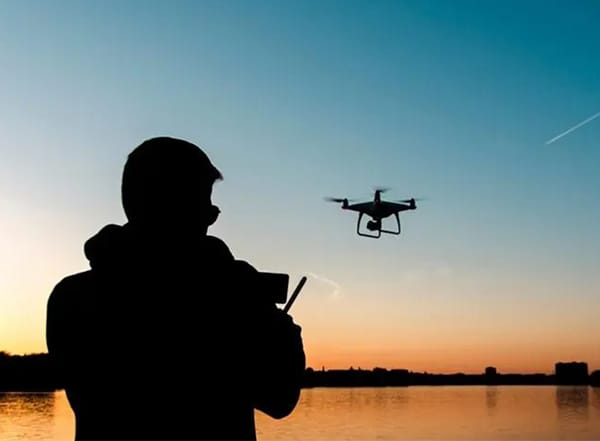
Methods to Disable a Drone: The Technology of Drone Take Down
In today’s contemporary society, the prevalence of drones is on the rise. Drones serve various purposes, including sightseeing, photography, and even capturing precious moments. However, a pressing concern emerges: are our critical facilities secure from these compact devices? Unfortunately, the answer is a resounding no. These drones pose significant threats to safety zones. This situation generates a crucial question: “How to take down a drone?”
Here the need for effective anti-drone defense measures increases. Whether for security issues, privacy concerns, or simply a desire to protect low-altitude airspace, finding effective ways to disable a drone has become a topic of interest. In practice, every successful drone take down starts with early detection and ends with a controlled neutralization of the target. If you are curious to know more about this, here, we will delve into various methods and technologies that contribute to anti-drone efforts, exploring how government agencies and authorized organizations can protect airspaces from unwanted aerial entries.
Knowing how to execute a safe drone take down is no longer optional for security teams managing critical airspace. The most reliable way to disable a drone without causing collateral damage is to interrupt its control link through signal jamming or GPS spoofing. A modern drone take down operation typically begins with radar or RF detection, followed by automated classification of the target, and ends with a soft-kill countermeasure that forces the UAV to land or return. For mobile patrols, handheld jammers provide a quick way to disable a drone in seconds, while fixed installations rely on layered detection to initiate a coordinated drone take down. As drone threats grow more sophisticated, combining multiple neutralization methods remains the gold standard for effective airspace defense.
Understanding the Need for Anti-Drone Defense
As drones become more accessible to the public, for various personal and commercial uses, the potential for misuse also rises. It increases concerns over privacy violations, unauthorized surveillance, and even security threats. In this situation, we need powerful anti-drone technologies. With reliable methods to search, detect, and counter drones without causing harm, we can ensure the safety of important facilities.
Here are the effective methods you can take to disable a drone:
Signal Jamming
The proven methods involve signal jamming. We know the basic concept of drone operation. It is widely recognized that a drone operator oversees the device from a significant distance, particularly when aiming to access a specific safe zone.
When we employ the signal jamming technique, a drone jammer breaks the communication link between the drone and its operator, rendering the drone nonfunctional. Even though you can see various advanced anti-drone technologies in the market with proven results in jamming drone operations, it is crucial to obtain these technologies from trustworthy suppliers. Thus, you can guarantee both jamming distance and a broad spectrum of frequencies.
Radio-Frequency (RF) Spoofing
RF spoofing involves “manipulating” the drone’s navigation system by emitting fake signals that mimic those used by the drone. This confuses the drone, leading it to follow false navigation instructions or lose its way. While this method requires specialized equipment, it provides an effective means of taking down a drone without resorting to physical force.
Laser Systems
Laser systems have emerged as a non-destructive anti-drone defense solution. By directing laser beams at a drone’s sensors or cameras, operators can counter drones. This approach proves beneficial in safely deactivating drones, ensuring a controlled descent, and avoiding unintended harm. The increasing popularity of precision-oriented anti-drone laser systems stems from their effectiveness in managing drone threats without the need for more forceful measures.
Conlusion
In the continuous effort to assert authority over our skies and defend against potential dangers, mastering the art of countering drones has become paramount. If you have the question of how to take down a drone, you can employ techniques like signal jamming and RF spoofing. These are the diverse choices for those aiming at robust anti-drone defense. A well-planned drone take down always prioritizes public safety, ensuring that to disable a drone does not interfere with surrounding communications. As counter-UAS technology evolves, integrating detection and neutralization into one workflow is the future of every effective drone take down.