
Table of Contents:
- Introduction
- What is an Anti-Drone System?
- How do Counter-Drone Defense Systems Actually Function?
- Where are Anti-Drone Systems Deployed?
- What are the Key Benefits of Anti-Drone Systems?
- Faster Incident Response
- Reduced Operational Risks
- Enhanced Public Safety
- What are the Premier Anti-Drone Systems?
- ND-BU002 High-End Anti-Drone System
- ND-BU005 Advanced Passive Anti-Drone System
- ND-BU008 High-End Integrated Anti-Drone System
- Conclusion
- FAQs
Key Takeaways:
- Anti-drone systems operate by detecting, identifying, tracking, and neutralizing unauthorizeddrones in restricted airspaces.
- Counter-drone defense solutions are crucial for protecting facilities like airports, government buildings, prisons, stadiums, and more.
- Anti-drone systems help ensure faster incident response, reduce operational risks, and improve public safety.
Introduction
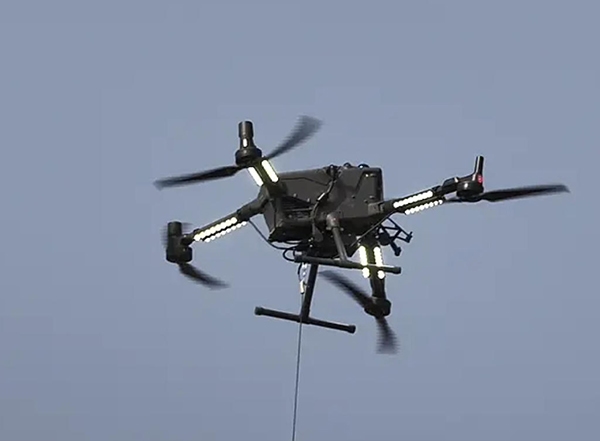
Have you ever thought about the amount of risk that unauthorized drones pose to the security of critical infrastructure and large event venues? If not, it’s time to think and act! As per reports, over 300 drones that were flying near the World Cup stadiums in the U.S. were seized by federal authorities (Source). That clearly reflects the growing security concerns related to rogue UAVs (Unmanned Aerial Vehicles). Even small drones pose a significant risk, causing unnecessary delays in public events, developing fear among people, and damaging properties. Therefore, authorized organizations are in search of ways to effectively counter unauthorized UAVs and promote airspace security. That’s exactly where the anti-drone defense technologies come into the big picture.
Wondering what is anti-drone system and how it works? Read on for a comprehensive overview.
What are Anti-Drone Systems?
Anti-drone systems refer to the technologies that help detect, track, and neutralize unauthorized drones. The core aim is to safeguard critical infrastructures like airports, power plants, large-scale event venues, and government buildings while preventing property damage and injuries to people.
How do Counter-Drone Defense Systems Actually Function?
Effective deployment of counter-drone solutions hinges on a comprehensive understanding of its operational framework. Wondering how do anti-drone systems work to detect and neutralize drones? Here is a complete operational overview.
The drone detection system continuously scans restricted airspace to identify and track unauthorized UAVs. Beyond basic classification, it delivers critical intelligence—including real-time position data and, when equipped with optical sensors, visual confirmation of potential payloads such as explosives. This comprehensive situational awareness enables operators to make informed, timely decisions.
Leveraging intelligence from the drone detection system, the drone jamming system disrupts the drone’s command-and-control link. This effectively neutralizes the threat, preventing the unauthorized UAV from executing its objective.
Where are Anti-Drone Systems Deployed?
Now that you understand how do anti-drone systems work, the next step is deployment. The critical question, however, is where these systems deliver the greatest impact. Below are the primary application scenarios.
- Prisons: The anti-drone defense systems help detect, identify and counterthe rogue drones, preventing the delivery of contraband items.
- Airports: The counter-drone solutions allow authorities to act on time, reducing the chances of unnecessary chaos and flight delays.
- Government Buildings: The anti-drone systems prevent unauthorized drones from conducting illegal surveillance and collecting sensitive data or trade secrets.
- Critical Infrastructures: The anti-drone defense systems enhance the airspace security of oil refineries, power plants, and other critical infrastructure by limiting rogue drones from dropping harmful explosives, carrying out illegal surveillance, or causing any physical damage.
What are the Key Benefits of Anti-Drone Systems?
Deploying counter-drone defense systems provides a range of operational benefitsThe key advantages are summarized as follows.
#1 Faster Incident Response
The drone detection system allows authorized organizations to monitor the airspace continuously and detect rogue drones in real time. As a result, responding to the incident faster and taking the necessary action becomes easier, preventing potential damage or financial loss.
#2 Reduced Operational Risks
The deployment of anti-drone systems at critical infrastructure facilitates operational continuity with minimal disruption. This approach translates into reduced operational downtime and enhanced cost efficiency.
#3 Enhanced Public Security
Large public events are often targeted by unauthorized drones. By deploying anti-drone systems, event organizations can enhance public safety, mitigate potential risks, strengthen public confidence, and ensure operational security.
What are the Premier Anti-Drone Systems?
When deploying counter-drone defense solutions, security organizations have a variety of systems to choose from. The primary options are summarized as follows.
#1 ND-BU002 High-End Anti-Drone System
ND-BU002 incorporates advanced 3D pulse Doppler radar, delivering substantially extended detection range. Equipped with multi-dimensional precision detection and robust countermeasure capabilities, it is ideally suited for safeguarding critical infrastructure.
#2 ND-BU005 Advanced Passive Anti-Drone System
ND-BU005 is an enhanced passive anti-drone system that integrates full-band RF detection and directional jamming, offering covert detection with low false alarm rate and highly efficient targeted jamming. This all-in-one stationary system, combining TDOA and AOA composite positioning, precisely geolocates drones and their operators, and is engineered to protect airports and government facilities from illicit drone threats.
#3 ND-BU008 High-End Integrated Anti-Drone System
ND-BU008 is a high-end integrated anti-drone system that merges active radar, RF detection, multi-mode jamming (directional, omnidirectional, and GPS spoofing), and camera into a single platform, delivering comprehensive and robust low-altitude airspace protection. This integrated fixed-site system features long-range detection, precision positioning, real-time tracking, and safe disposal capabilities, is architected for deployment at major public events, critical infrastructure, government facilities, bases and border zones, and urban security perimeters.
Conclusion
Anti-drone defense systems have become an operational necessity for the protection of critical infrastructure, public venues, government facilities, and the integrity of low-altitude airspace. Our commitment lies in continuous technological advancement, delivering high-performance solutions tailored to evolving threats. Backed by a team of domain specialists, we provide not only cutting-edge products but also the expert support required to ensure effective deployment and long-term mission success.
FAQs
Q1: What is the maximum detection range and what factors affect it?
A1: The maximum detection range varies by system configuration and operating environment. Radar-based detection typically extends to several kilometers for small UAVs, while RF detection range depends on the drone’s emission power and signal characteristics.
Q2: How does the anti-drone system handle multiple drone threats simultaneously?
A2: The system is capable of detecting, tracking, and prioritizing multiple UAVs simultaneously through its multi-sensor fusion architecture. Operators receive a unified situational awareness display, with the ability to engage high-priority targets selectively while maintaining continuous monitoring of the surrounding airspace.
Q3: How does the anti-drone system differentiate between authorized and unauthorized drones?
A3: The system employs RF fingerprinting and protocol analysis to identify drone models and their unique signal signatures. Combined with TDOA/AOA geolocation, it can distinguish between pre-authorized drones and unknown or suspicious aircraft, enabling operators to focus on genuine threats while minimizing false alarms.
Q4: What are the deployment options for the anti-drone system?
A4: The system supports both fixed-site and vehicle-mounted configurations. Fixed installations are typically deployed at critical infrastructure, border zones, and government facilities, while vehicle-mounted configuration is suitable for border patrol, area surveillance, and mobile interdiction operations.